Location: Warsaw, Poland Competition: Open int. competition — honorable mention Year: 2013 Area: 2,5 ha Architecture: KOZIEŃ Architekci
Among the fundamental issues discussed at the beginning of the 21st century are our relationship with the natural environment, social concerns, and a sustainable way of life on Earth.
As a point of reference for these pressing contemporary themes, the GARDEN OF THE 21ST CENTURY offers a reflection on the relationship between NATURE and CULTURE.
This universal theme, which affects every person regardless of their origin, social background, or abilities, promotes an inclusive approach that forms the foundation of the concept.
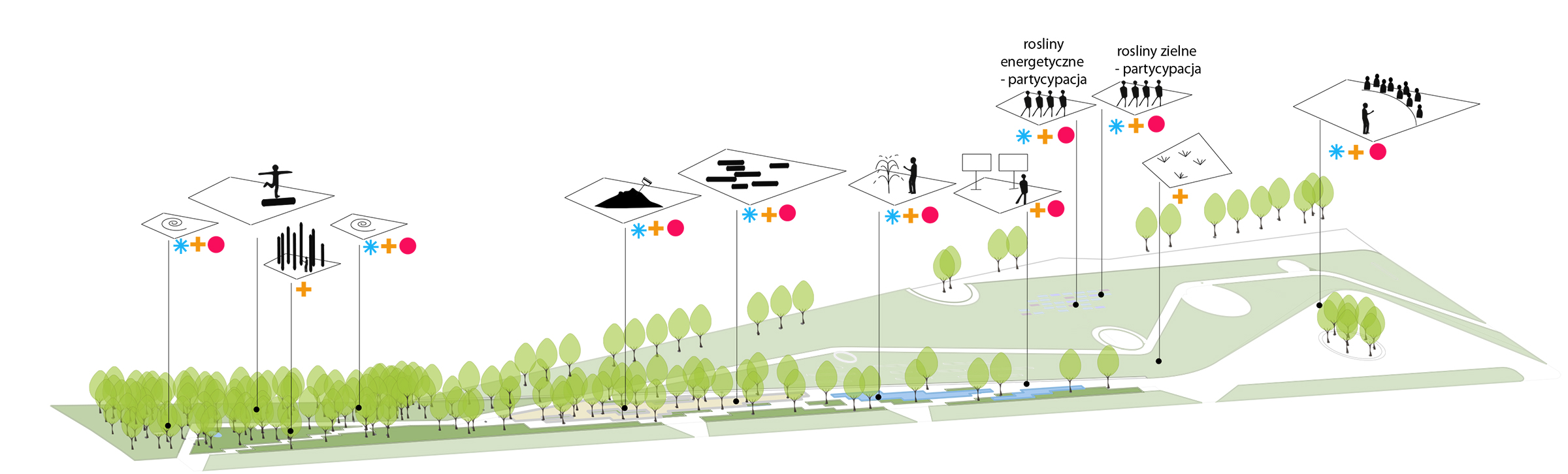
EDUCATION Educational measures aimed at raising awareness and imparting knowledge in the field of the environment (information points, workshops, hands-on experiences), as well as measures to raise awareness and convey knowledge in the field of cultural creation, including horticultural heritage (information, workshops, competitions).
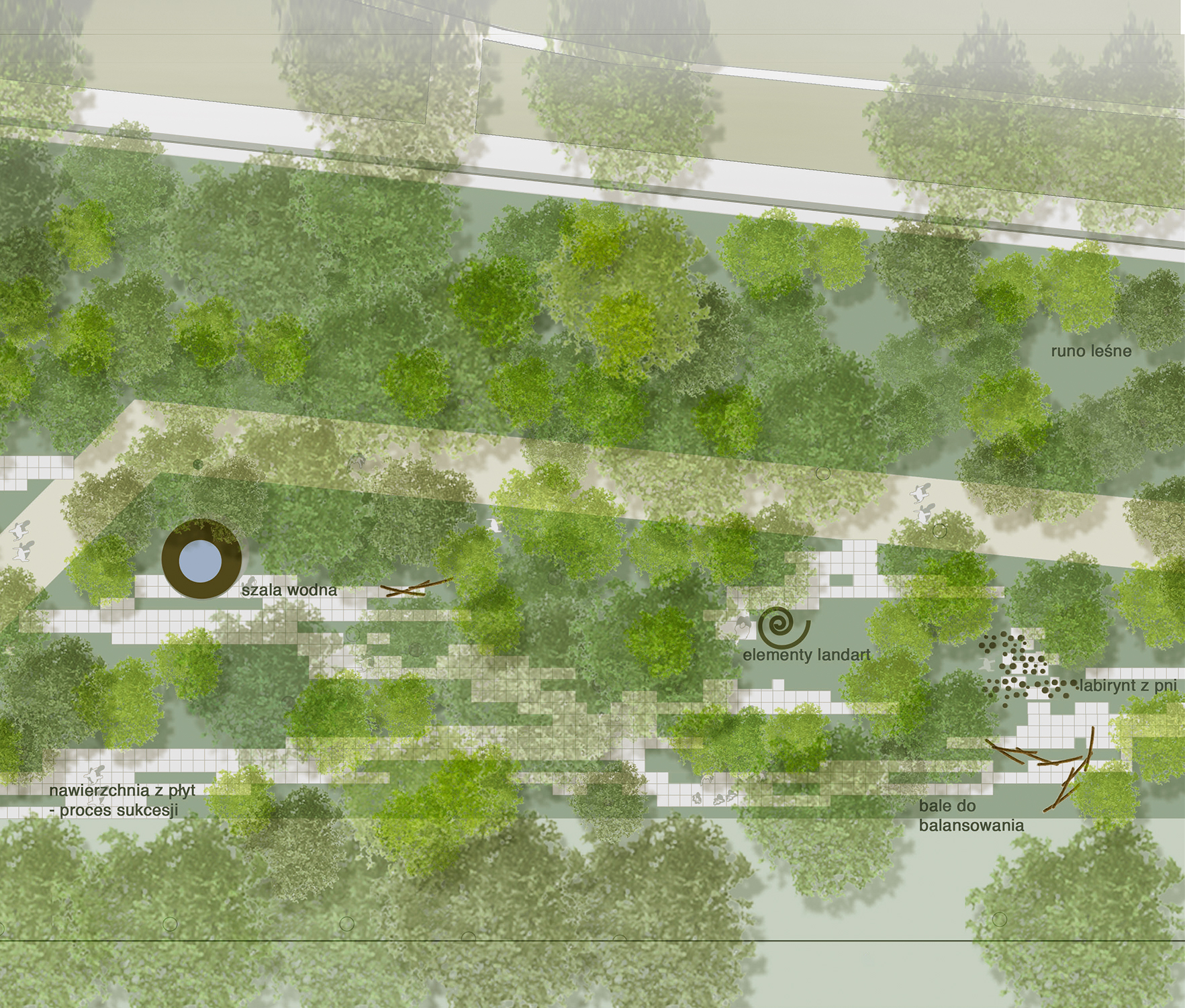
CREATION Artistic activities (workshops, plein air sessions, land art), as well as creative play or creation (not predetermined in advance), including participatory spaces and land art.
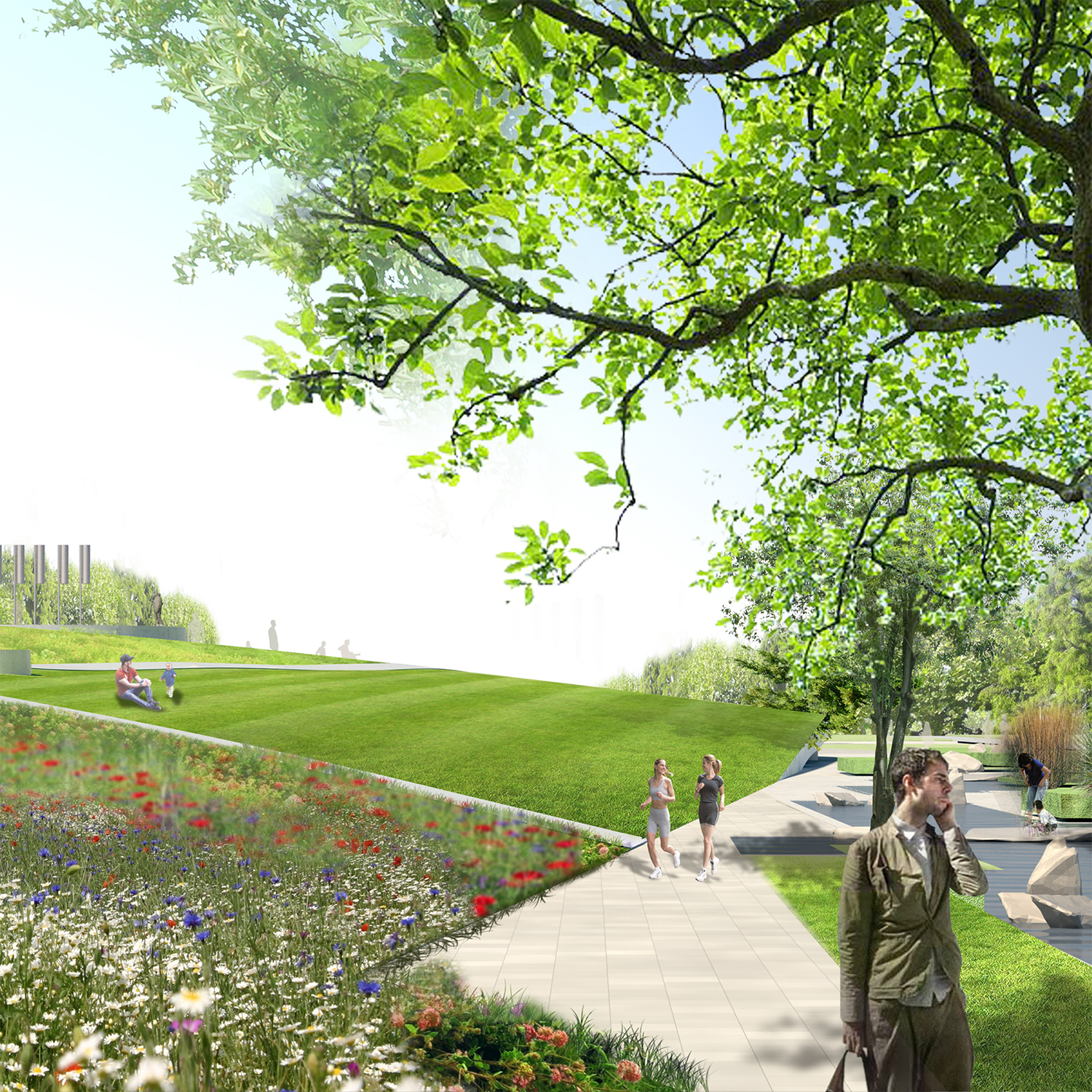
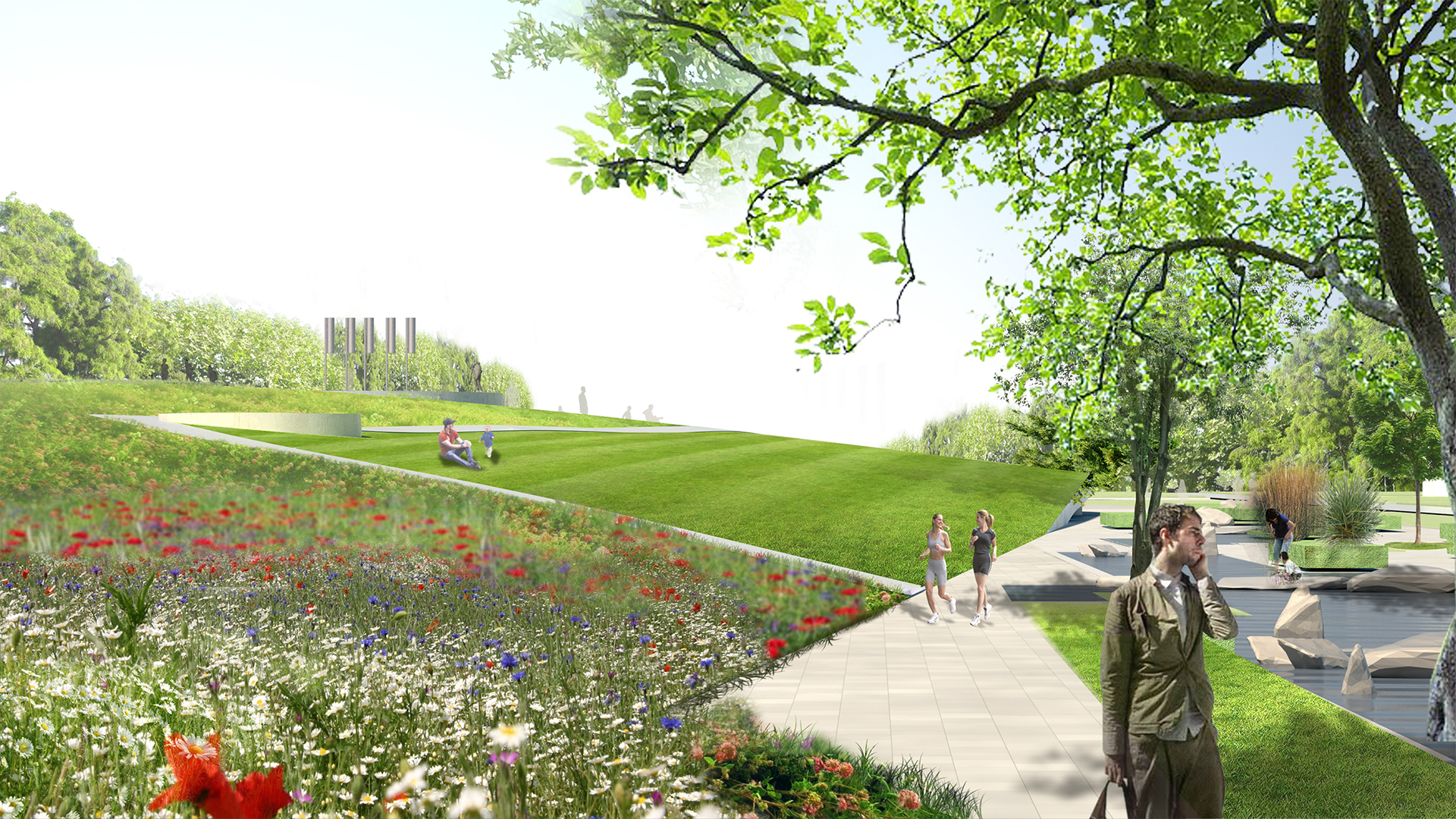
LEISURE Active leisure activities (gardening, workshops, games) and passive leisure activities (observing nature, relaxing on the lawn).
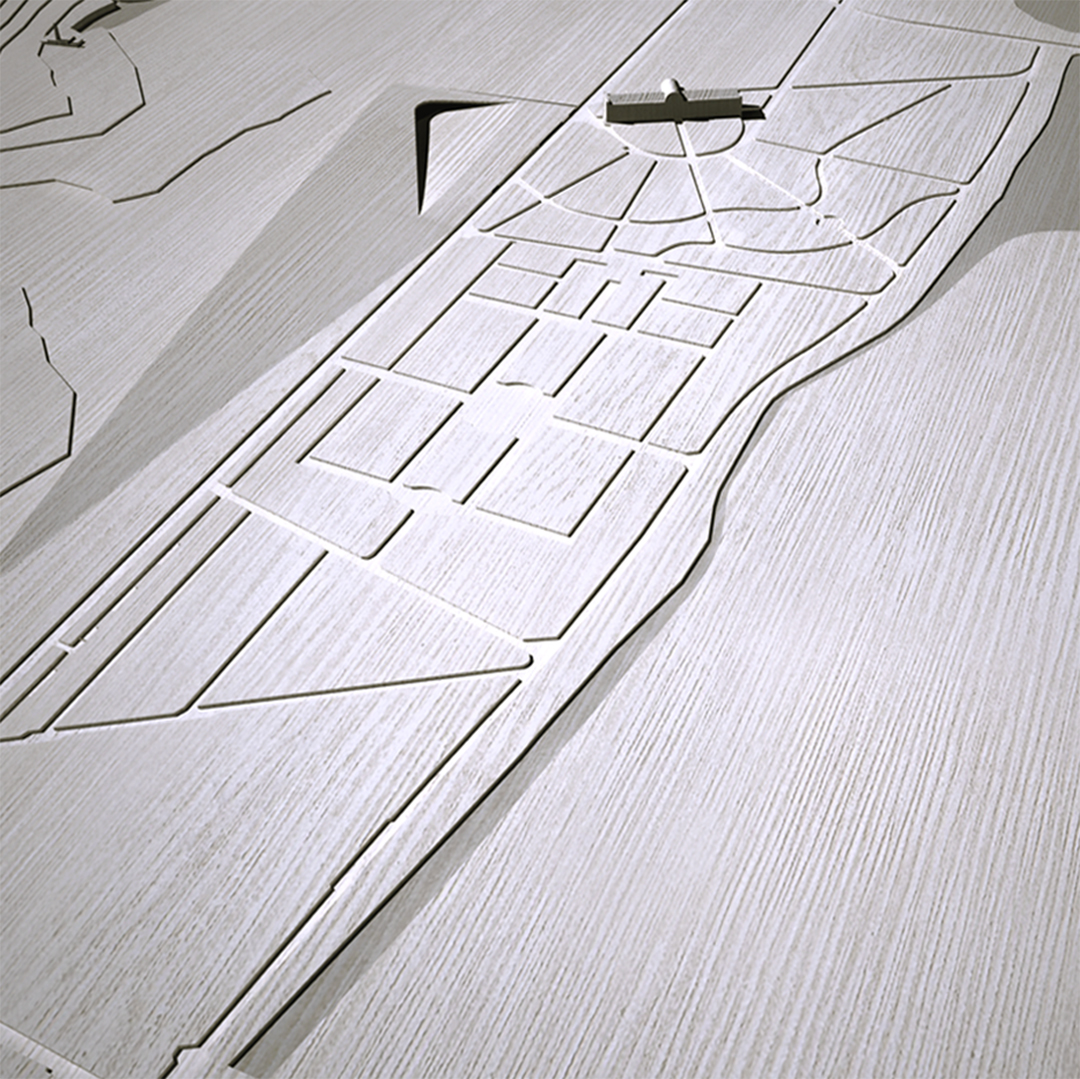
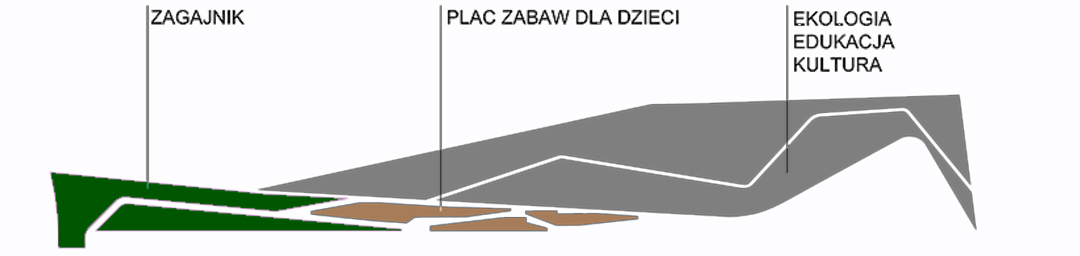
TERRAIN
NATURE — CULTURE
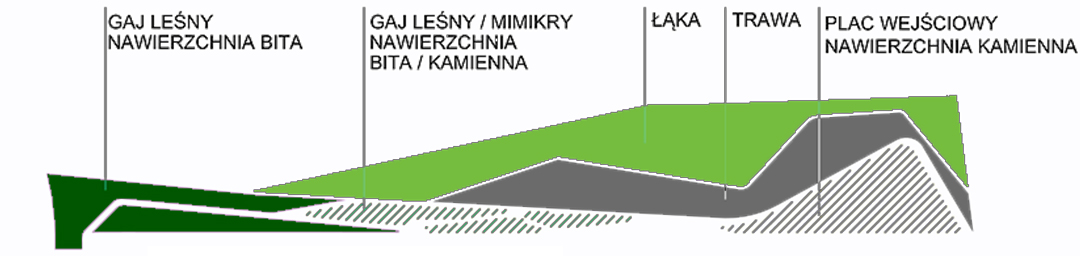
SECTIONS
FORM
SURFACES
CONCEPT — SYNTHESIS
Innovation and the use of environmentally friendly technologies implemented in the GARDEN OF THE 21ST CENTURY play an increasingly important role not only in our personal relationship with nature, but also in interpersonal relations within contemporary society. The clear and accessible presentation of applied solutions based on the principle of “learning through play” (experience) is an integral part of the concept of the GARDEN OF THE 21ST CENTURY.
The unique value of the GARDEN OF THE 21ST CENTURY – THE GARDEN OF REFLECTION lies in awakening perception and awareness of the development of garden art over the centuries.
CONNECTIONS
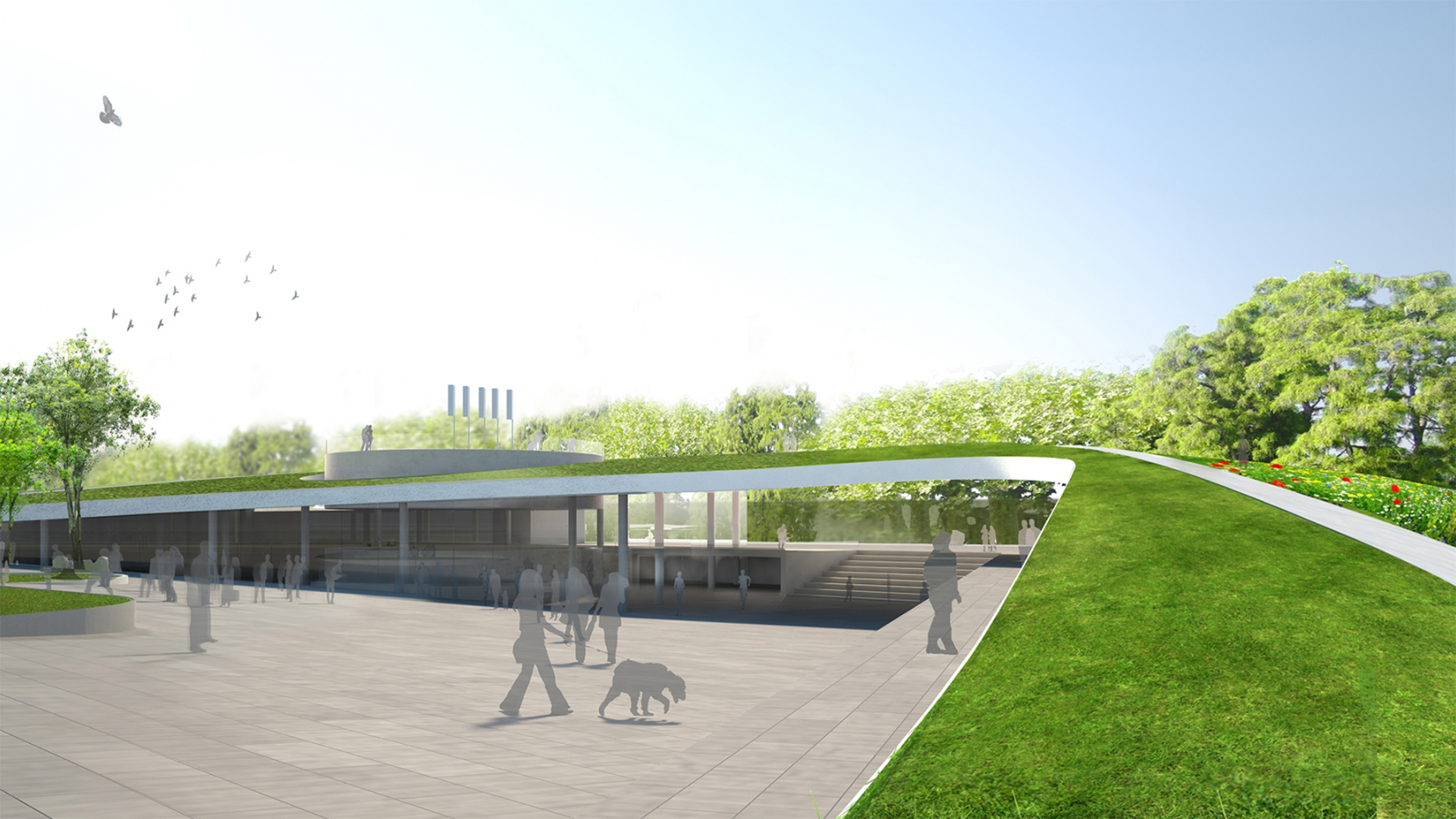
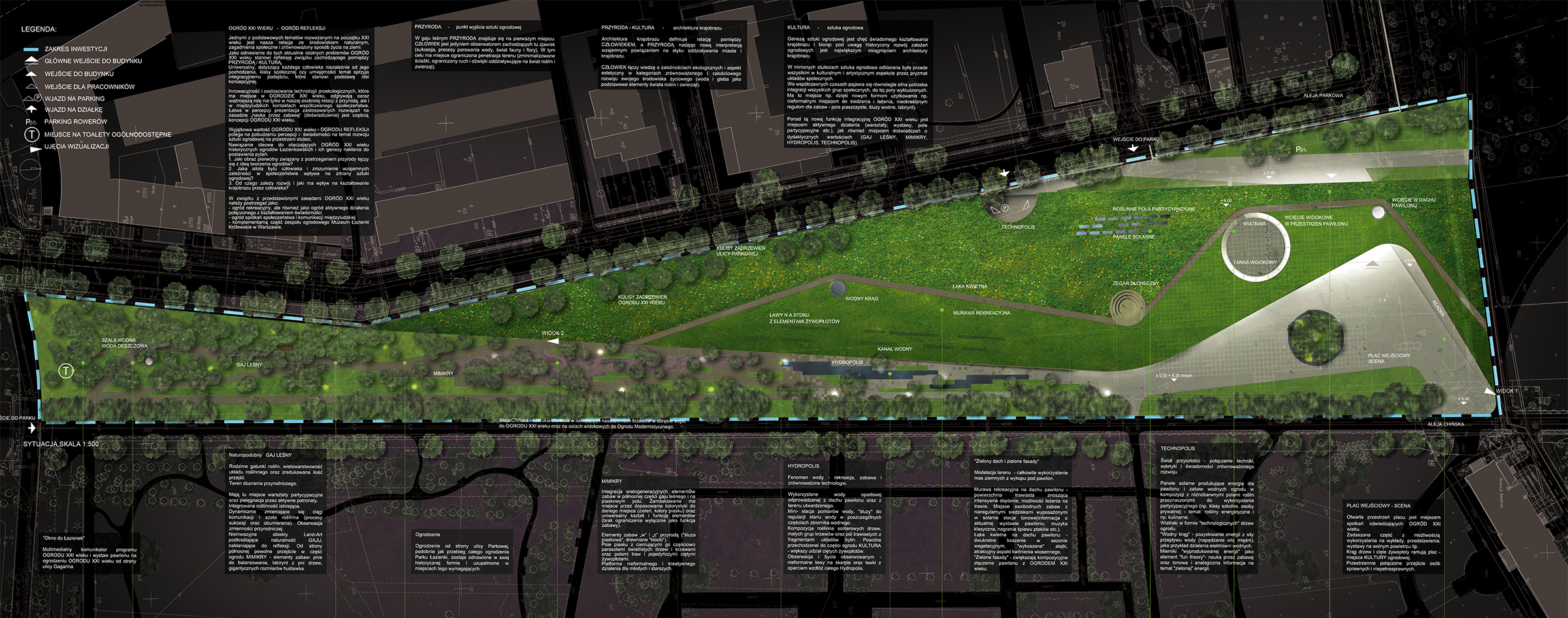
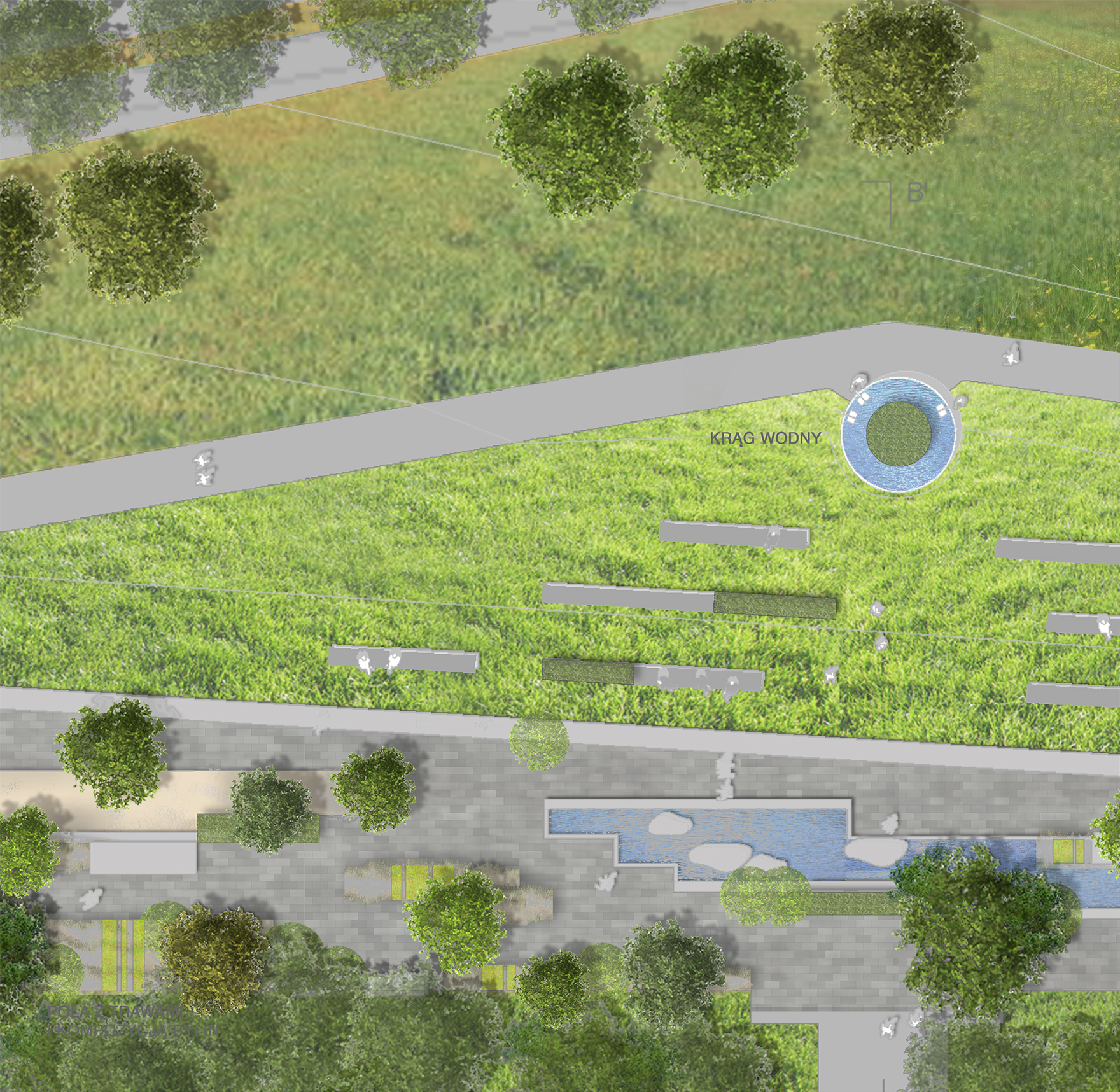
The historical development of Łazienki Park is reflected both conceptually and physically in the design of the GARDEN OF THE 21ST CENTURY. Existing axes and visual connections of the surrounding gardens have been emphasized in order to create a continuation of Łazienki Park and a connection to the city.
INTEGRATION / PARTICIPATION
The relationship to the surroundings, the design of the garden, and the programmatic content are guided by the principles of participation and integration. The participatory and interactive design of the Garden of the 21st Century aims to expand the perception of the entire garden ensemble of Łazienki Park as a unique example of garden art—as part of human CULTURE.
OPEN PLANNING APPROACH
The open design principle leads to synergy effects in which multiple functions complement each other spatially while conceptual content and objectives are implemented simultaneously (see graphic section). The resulting synergies are flexible and dynamic.
This planning approach makes it possible to respond to changing conditions and allows individual parts of the GARDEN to be adapted programmatically and functionally to new societal requirements. The GARDEN OF THE 21ST CENTURY extends Łazienki Park in Warsaw both spatially and programmatically, creating a space that functions sustainably within this historic park complex with regard to nature conservation, the use of environmentally friendly technologies, integration, and the conscious management of existing resources.