REUSE OF THE HOSPITAL PROPERTY
Location: Zittau, Germany
Client: City of Zittau
Competition: Closed, single-phase ideas competition
Year: 2025
Area: 3.500 m²
Architecture: Atelier Starzak Strebicki
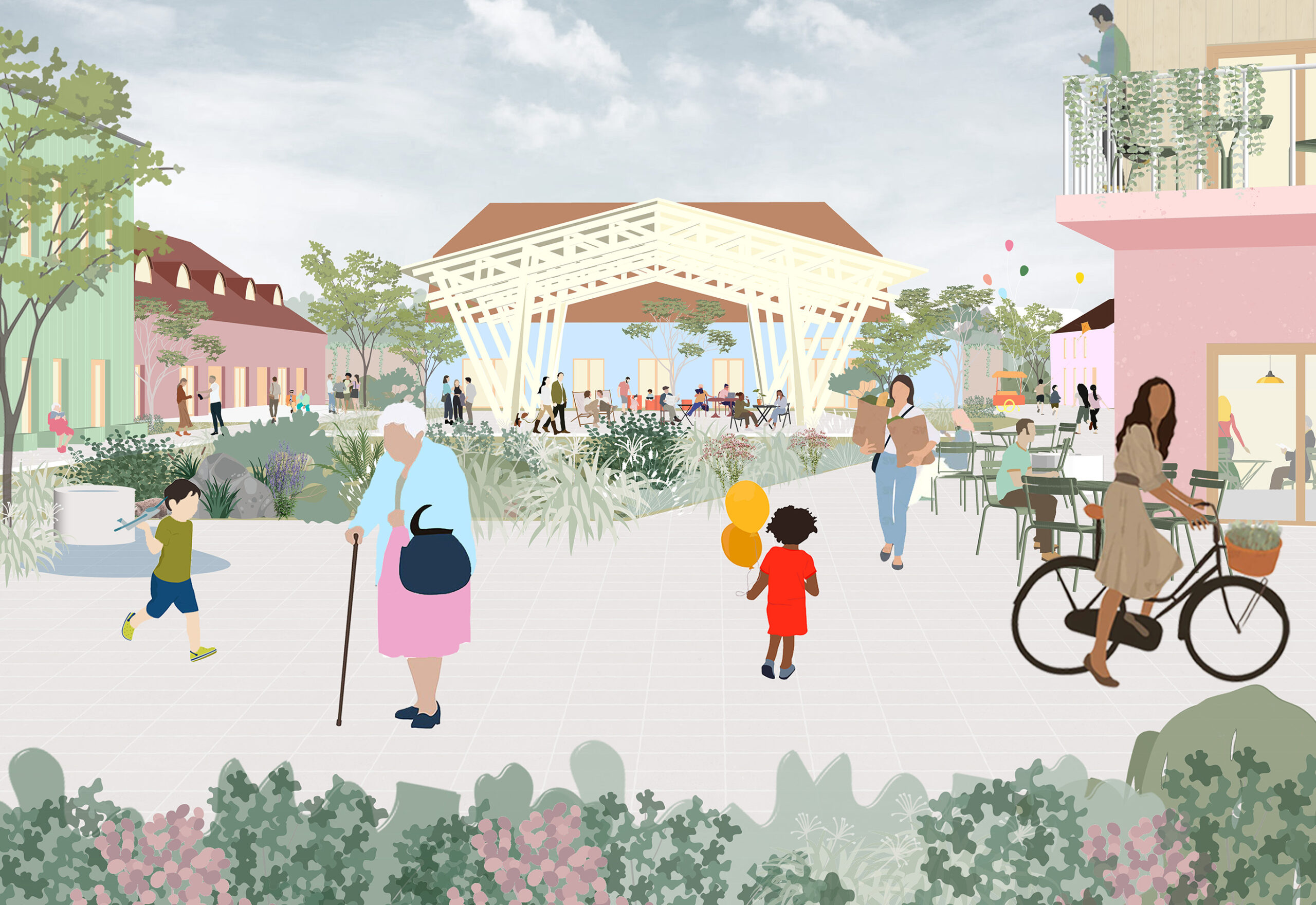
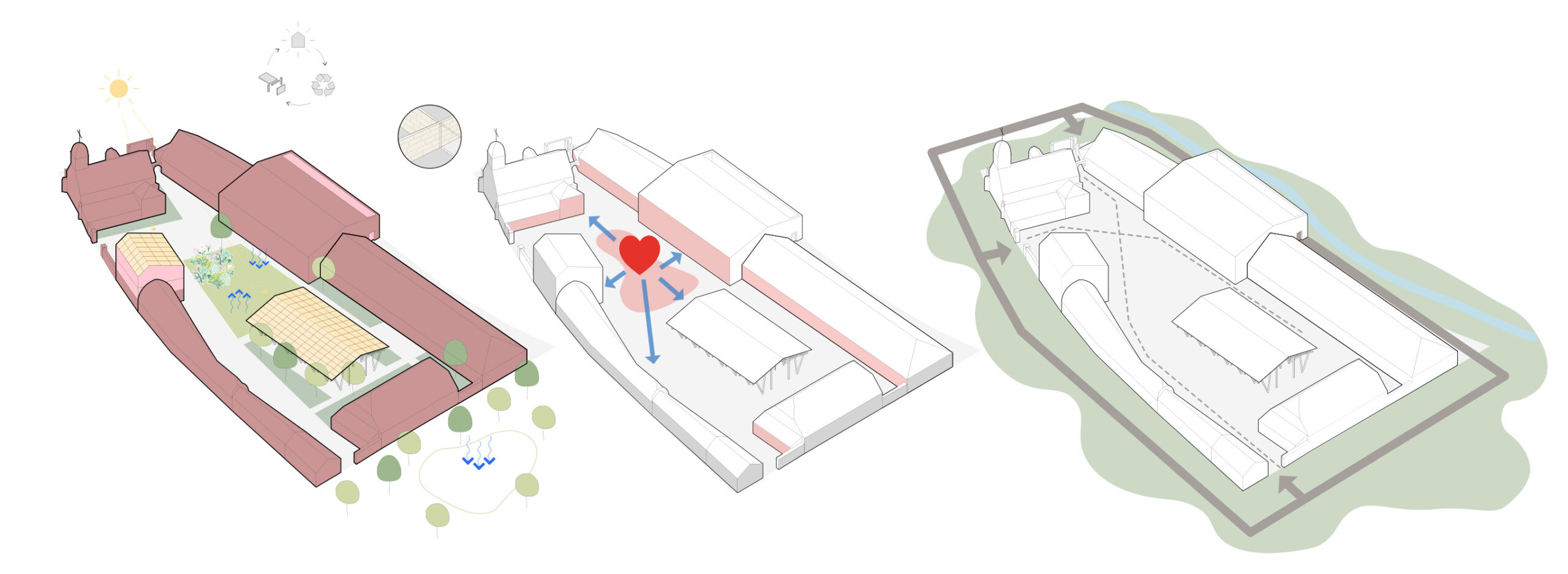
With respect for the rich historical heritage of this place and an awareness of its unique cultural and historical context, we see the Hospitalgut on Martin-Wehnert-Platz as a space with great potential.
Our revitalisation proposal is based on the assumption that a creative and sustainable redesign of this listed architectural ensemble is possible, so that it can both serve the local community and attract tourists visiting the border triangle of Germany, Poland and Czechia.
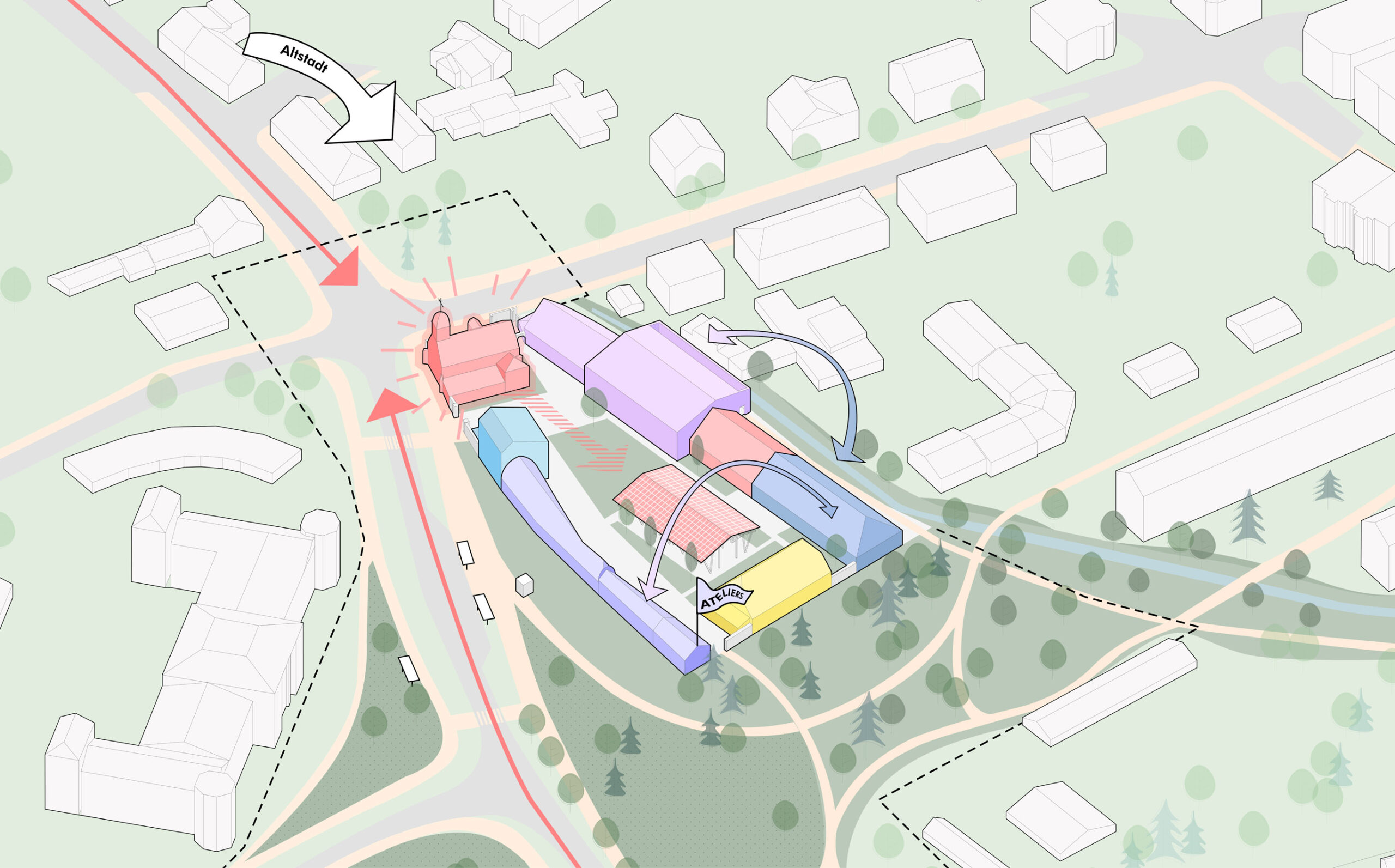
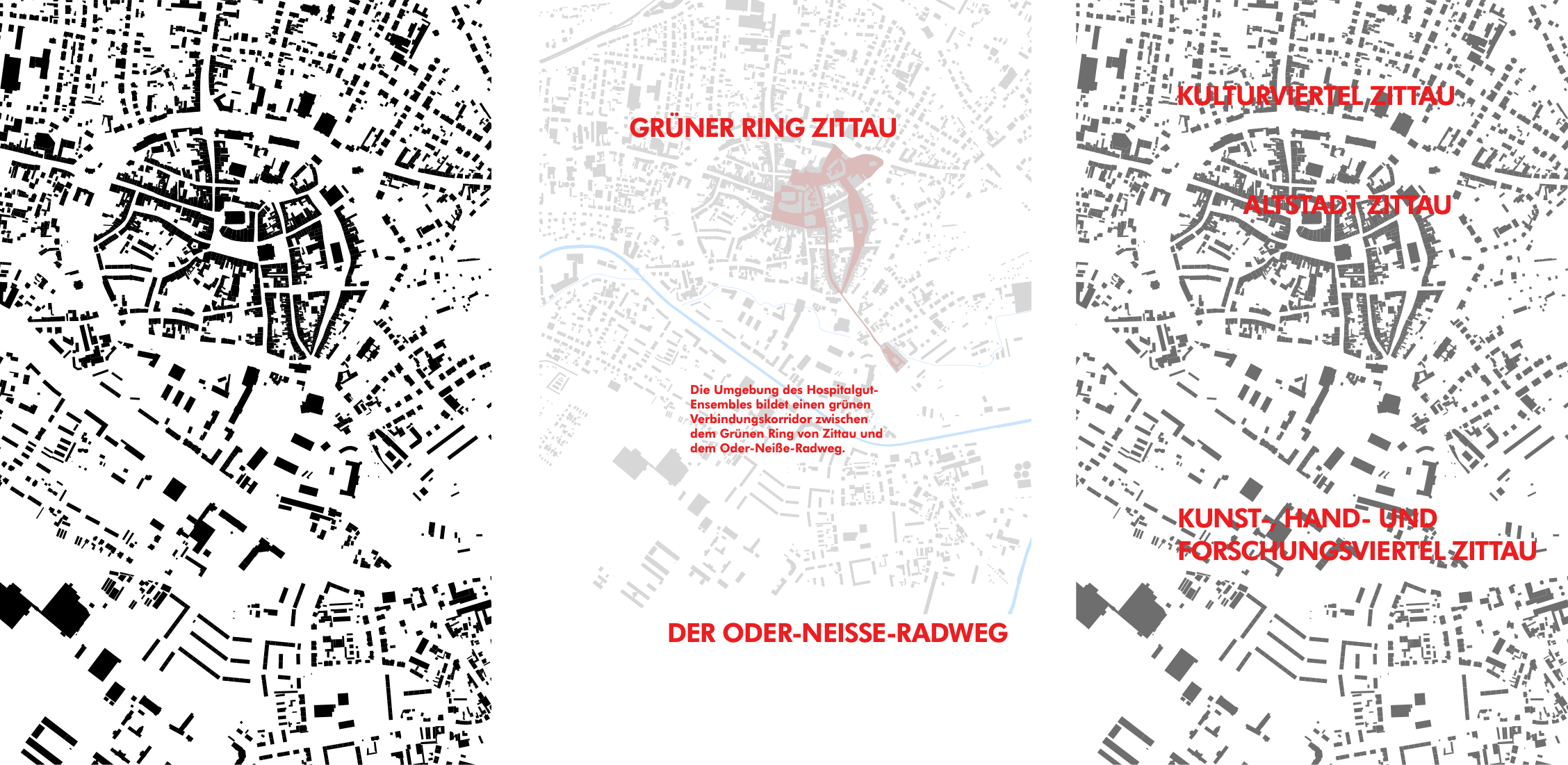

In our vision, the proposed urban planning and architectural solutions represent an impetus for the gradual transformation of this area – they are intended to reveal its potential and give it a new, contemporary identity with regional and supra-regional significance. Our approach is based on four core values that we consider to be the foundation for future development:
Creativity – stands for the flexibility and openness of the proposed solutions, the possibility of adapting the process of redesigning spaces to new needs, and the potential to enrich the cultural and social life of the city.
User orientation – we see the space as a potential for interaction between local residents and visitors, producers and consumers – and as a shared space where economic aspects coexist with social values. Our approach is based on the WIMBY (Welcome In My Backyard) concept, which provides for the actual involvement of the local community in the planning and implementation process.
Economic efficiency – understood as the efficient use of resources: time, energy, finances and materials. This aspect is crucial in order to achieve satisfactory results while at the same time taking a conscious and economical approach.
Sustainable development – we do not only understand it as an ecological approach to construction and the use of resources, but also as the harmonisation of social, cultural and economic goals. Sustainability means both caring for the future of the place and being mindful of its current users.
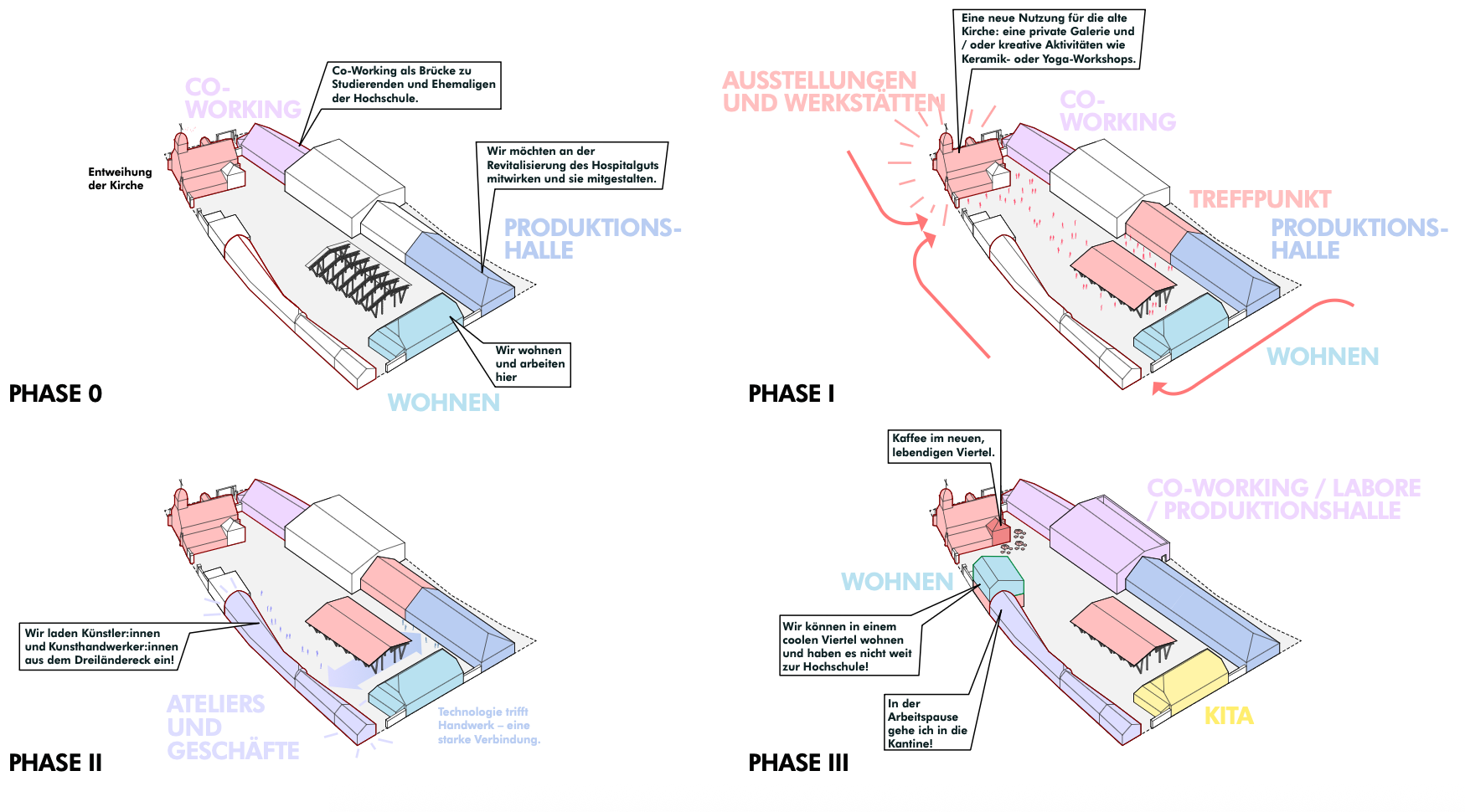
THREE TRANSFORMATION PHASES
The phased planning measures and gradual redevelopment of the Hospitalgut site bring not only economic benefits, but above all social and organisational advantages. This model enables ongoing monitoring and evaluation of the solutions implemented, as well as a flexible response to the needs of users and the surrounding area. This allows strategies to be effectively adapted and further developed. The gradual transformation also creates the conditions
for the formation of a lasting community around the site and strengthens its identity and character.
Phase I: Education and collective formation – foundations of change
Phase II: Development – growth and diversification of activities
Phase III: Independence and self-sufficiency